
Using an e-bike for mobility does not automatically override every trail restriction, but a general e-bike ban is not the whole answer either. At a state or local government facility, or a business covered by the ADA, disability-related powered mobility use must be considered under the applicable accessibility rules. Federal land has a different governing framework.
Start With Who Manages the Trail

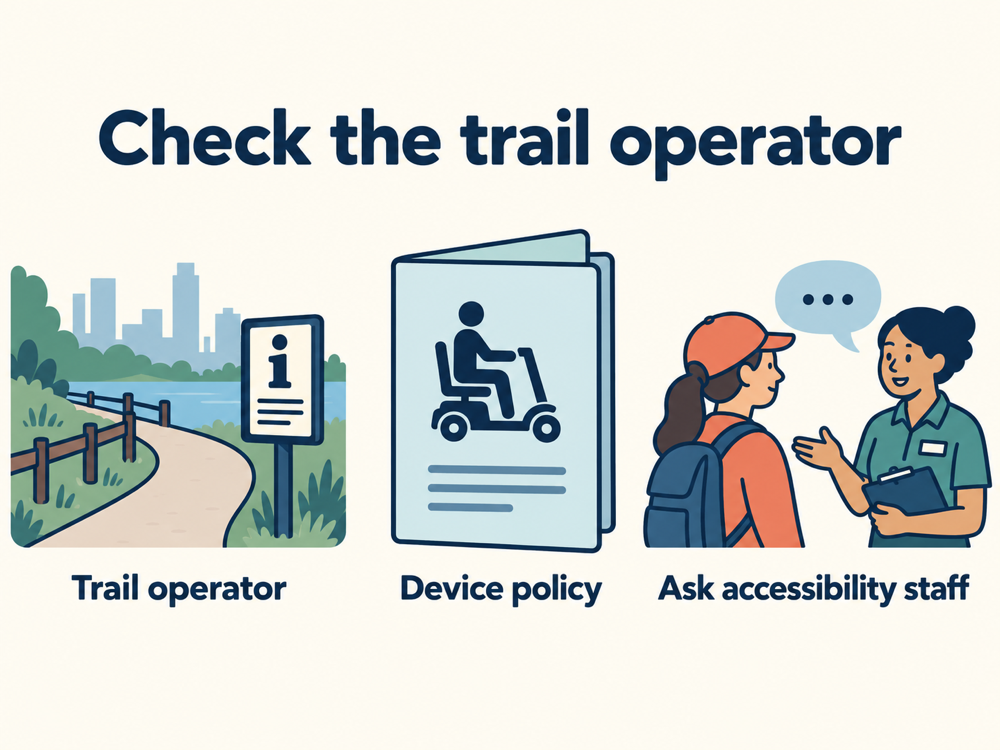
Find the actual operator of the path you want to use. A city greenway, a private visitor attraction, and a National Park can have different access procedures even when all are described as public places.
Read the operator's mobility-device policy alongside its ordinary bicycle rules. If the policy is unclear, contact its accessibility staff rather than relying only on a general "no e-bikes" sign.
The important question is specific: how does this operator handle disability-related use of this powered device on this particular path?
An E-Bike Is Not Automatically a Wheelchair
A device used for mobility is not necessarily classified as a wheelchair. The Justice Department and National Park Service distinguish wheelchairs, which are primarily designed for disability-related mobility, from other powered devices used by people with mobility disabilities.
That distinction matters because a rule allowing wheelchairs wherever pedestrians may go cannot simply be transferred to an ordinary e-bike.
It also does not make the rider's mobility need irrelevant. The question moves to the applicable rules for that device and location rather than ending with its product category.
Ask About This Device on This Path
Under the ADA framework, covered operators generally must allow other power-driven mobility devices unless legitimate safety requirements prevent that type of device from being accommodated. Assessments must consider actual risks rather than assumptions about disability.
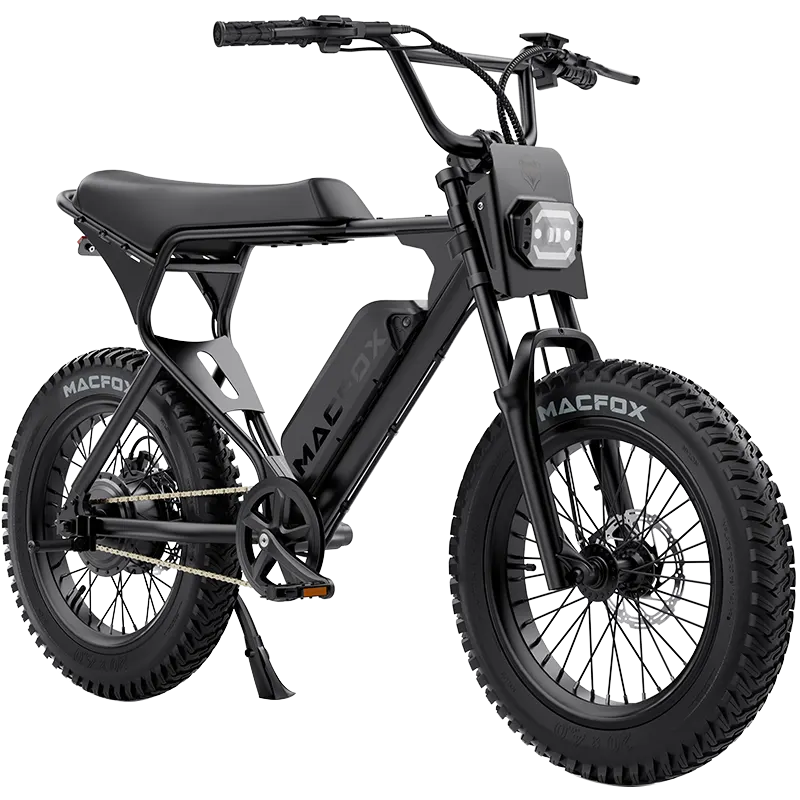
Describe your electric bike's dimensions, how you would operate it, and the path involved. Product details can help with that description; they do not themselves establish accessibility approval. Ask about the actual device and intended route rather than relying on a broad vehicle label.
ADA guidance allows credible verbal assurance of disability-related use when not contradicted by observable facts. It does not authorize asking about the nature or extent of a disability. Do not assume you must send a diagnosis to ask an access question.
Resolve the Route Before Arriving at the Gate
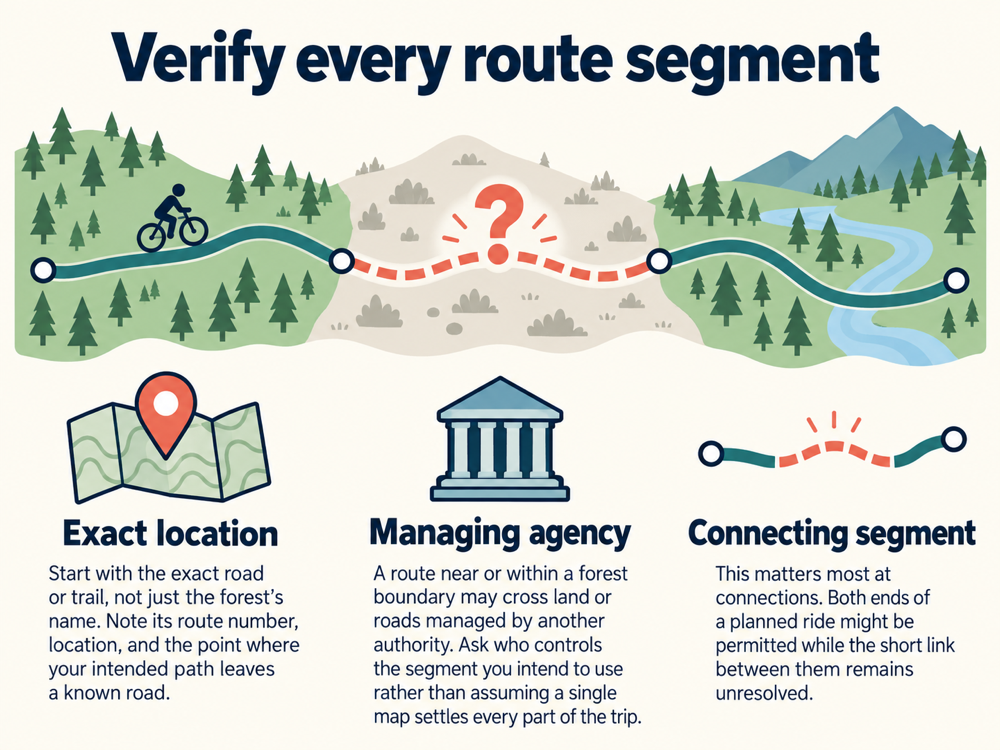
Ask which conditions apply to the intended path, whether a particular entrance is required, and what accessible alternative exists if that device cannot be accommodated there. Seeking clarification does not mean every covered facility requires advance permission.
For federal land, use that agency's accessibility guidance rather than treating the ADA discussion above as a universal trail exemption.
The guide to e-bikes on trails provides ordinary access context. Disability-related access needs its own location-specific answer, not an automatic yes or an automatic no.