
Some people want a fat tire eBike that works better for commuting. Others want to ride on sand or snow. Some are looking for a more stable experience across mixed terrain, while others care more about budget, folding capability, or payload capacity.
That’s why the “best” fat tire eBike isn’t the one with the biggest specs — it’s the one that actually fits your riding scenario.
Who Should Actually Buy a Fat Tire eBike

If your riding routes often include potholes, bike paths, gravel roads, grass, loose terrain, muddy conditions after rain, or even snow in winter, a fat tire eBike will have clear advantages over a standard commuter eBike.
The benefit of wider tires isn’t just about looking “cool.” It’s about better stability and a more forgiving ride feel. This is especially helpful for beginners, larger riders, or anyone who prioritizes comfort — it simply feels easier and more confidence-inspiring to ride.
That said, if you care more about lightweight design, portability, efficiency, and battery usage, a fat tire eBike may not be the best choice. Wider tires and a heavier frame reduce efficiency compared to lighter city eBikes.
So in practice, fat tire eBikes are best suited for riders who want more comfort, more stability, and better adaptability across different road conditions.
Key Features of the Best Fat Tire eBike
1. Tire Width
Most true fat tire eBikes typically use tires in the 3.8 to 5.0 inch range, with around 4.0 inches being the most common. This width is already enough to noticeably improve stability on gravel, snow, rough roads, and broken city pavement. Going wider can further enhance float on soft terrain, but it also increases rolling resistance and weight.
2. Battery Capacity
Fat tire eBikes consume more power than standard eBikes. They are heavier, have wider tires, and are often used on more demanding terrain.
In real-world use, it’s better to prioritize around 600Wh or more. If you ride longer distances, deal with hills, or carry gear, a larger battery — or even dual battery setup — becomes much more practical.
3. Front Suspension
Many people assume fat tires alone provide enough cushioning, but that’s not entirely true.
Fat tires help absorb vibration, but when hitting repeated cracks, bricks, gravel, or potholes, a front suspension fork still makes a noticeable difference in reducing arm and shoulder fatigue.
A travel range of 80–100 mm is usually ideal:
-
Around 80 mm is enough for most urban rough roads and light gravel
-
100 mm works better for rural roads or more complex mixed terrain
Longer travel is typically more for aggressive off-road riding and isn’t necessary for most daily riders.
4. Brakes: Hydraulic Disc Brakes Matter More Here
Fat tire eBikes are heavier and carry more momentum, so braking performance matters more.
Hydraulic disc brakes are generally a better fit than mechanical ones. They provide smoother, more consistent braking, require less hand effort, and feel more predictable — especially on downhill sections, mixed terrain, wet roads, or when carrying extra weight.
The Best 7 Fat Tire Ebike for Different Riders
Quick Comparison Table
| Model | Current Price | Motor | Torque | Top Speed | Payload Capacity |
|---|---|---|---|---|---|
| Velotric Nomad 2 | $1,999 | 750W / 1300W peak | 90Nm | 28 mph | 505 lbs |
| Aventon Aventure.2 | $1,499 | 750W | — | 28 mph | ~400 lbs |
| Lectric XPeak 2 | $1,399–$1,599 | 750W / 1310W peak | 85Nm | 28 mph | 330 lbs |
| Ride1Up Portola | $995+ | 750W | 65Nm | 28 mph | Rack 150 lbs |
| Himiway Zebra | $1,499 | 750W | — | 20–28 mph | 400 lbs |
| Macfox X7 | $1,599 | 500W / 750W peak | 65Nm | 20 mph | 330 lbs |
(Disclaimer: Product details are based on official websites at the time of writing and may be updated.)
Velotric Nomad 2 — Best fat tire ebike for commuting
For users who want “commuting + light exploration,” this positioning feels very natural.
If you want a fat tire eBike that is more suitable for daily commuting, the Velotric Nomad 2 is a very representative one. It is built to balance commuting practicality with light off-road capability. The reason it works for commuting lies mainly in the way its specs are put together for daily use: 90Nm of torque is better suited for starts at traffic lights, mild city hills, and frequent stop-and-go riding; the 705.6Wh battery gives it more range headroom than many basic commuter bikes, making it suitable for weekday commuting plus weekend rides; and the 505 lb payload capacity is also more suitable for backpacks, racks, and daily cargo needs. In other words, it is not the most extreme off-road-oriented fat tire bike, but the kind that is more suitable for broken city roads, everyday riding, and multi-scenario commuting.
Aventon Aventure.2 — Best fat tire ebike for trails and mixed terrain
If your riding is more likely to switch between pavement, bike paths, dirt roads, and light gravel, the Aventon Aventure.2 makes more sense as an all-around fat tire ebike. Its mixed-terrain fit depends on whether it can handle mud, dirt, snow, and pavement without feeling unstable. The key specs behind that versatility are its 4-inch fat tires, 80 mm suspension fork, and hydraulic disc brakes. The tires add stability and confidence across changing surfaces, the suspension helps smooth out rougher sections, and the hydraulic brakes are a better fit for a heavier bike being used on variable terrain. That combination makes the Aventure.2 feel less like a niche snow-or-sand bike and more like a true go-anywhere fat tire ebike for everyday mixed use.
Lectric XPeak 2 — Best budget fat tire ebike
If you want a fat tire ebike at a friendlier price without dropping into the “cheap but compromised” category, the Lectric XPeak 2 is one of the strongest value picks. Its appeal in the budget category is that it keeps the core fat-tire ingredients at a friendlier price. What makes it work in the budget category is not just price, but the fact that it still keeps the key fat-tire ebike ingredients that matter in real use, including its adventure-style fat tire setup and 330 lb payload capacity. Those details matter because they show it is still built for more than casual short rides — it has the load support and overall positioning to feel like a genuinely usable multi-purpose fat tire ebike, not just an entry-level model with oversized tires.
Ride1Up Portola — Best folding fat tire ebike
If you live in an apartment, have limited storage, or want a fat tire ebike that can work for camping, van life, or trunk transport, the Ride1Up Portola is a smart folding option. Its folding format is most useful for riders who want a reasonably priced fat tire e-bike but do not have much storage space. What makes it fit this category is not just the folding frame itself, but the way it balances foldability with the added comfort and stability of a fat tire setup. A nimble-yet-stable ride feel matters because folding fat tire ebikes often struggle to do both well. The Portola stands out because it gives riders a more compact storage-friendly bike without giving up too much confidence on rougher surfaces.
Himiway Zebra — Best fat tire ebike for heavier riders
Use third-party reviews as one input only. For a fat tire e-bike, the more reliable check is whether the tire width, payload, brake setup, battery range, support path, and real terrain fit match your ride.
Macfox X7 — Best fat tire ebike for heavier riders
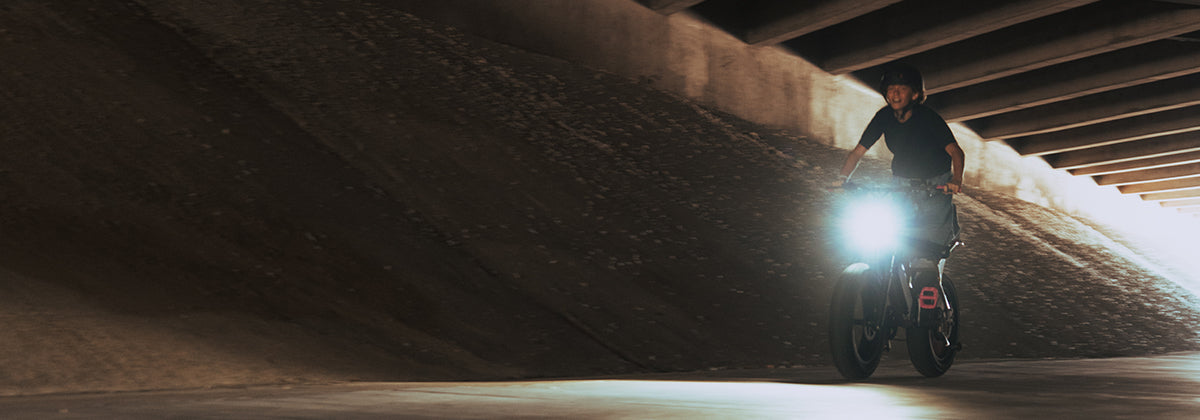
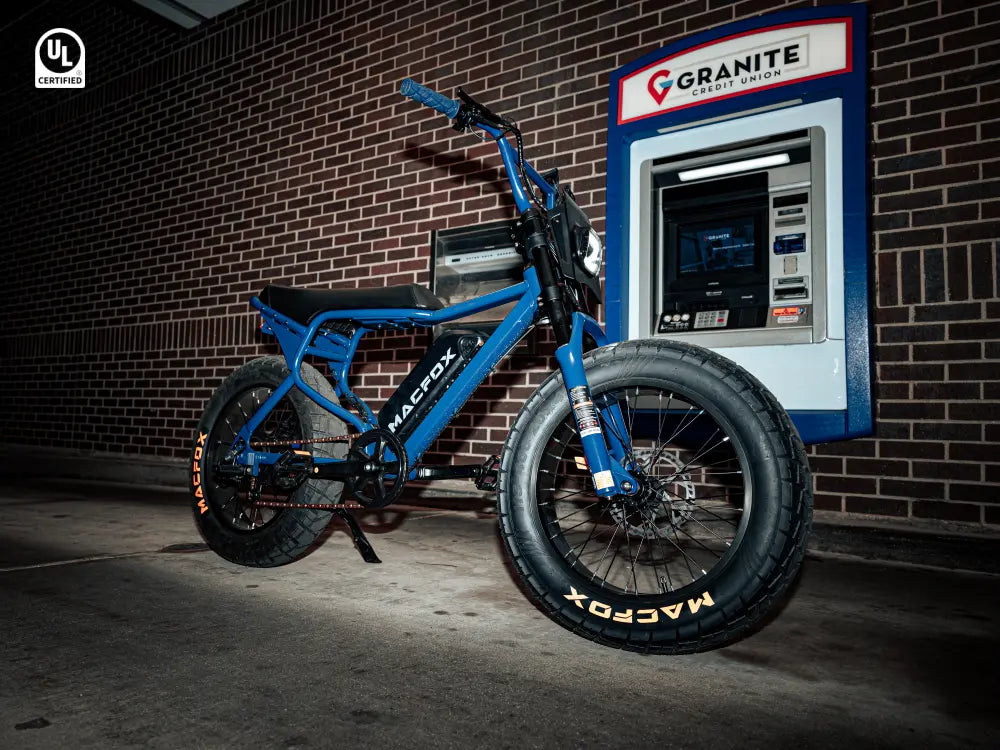
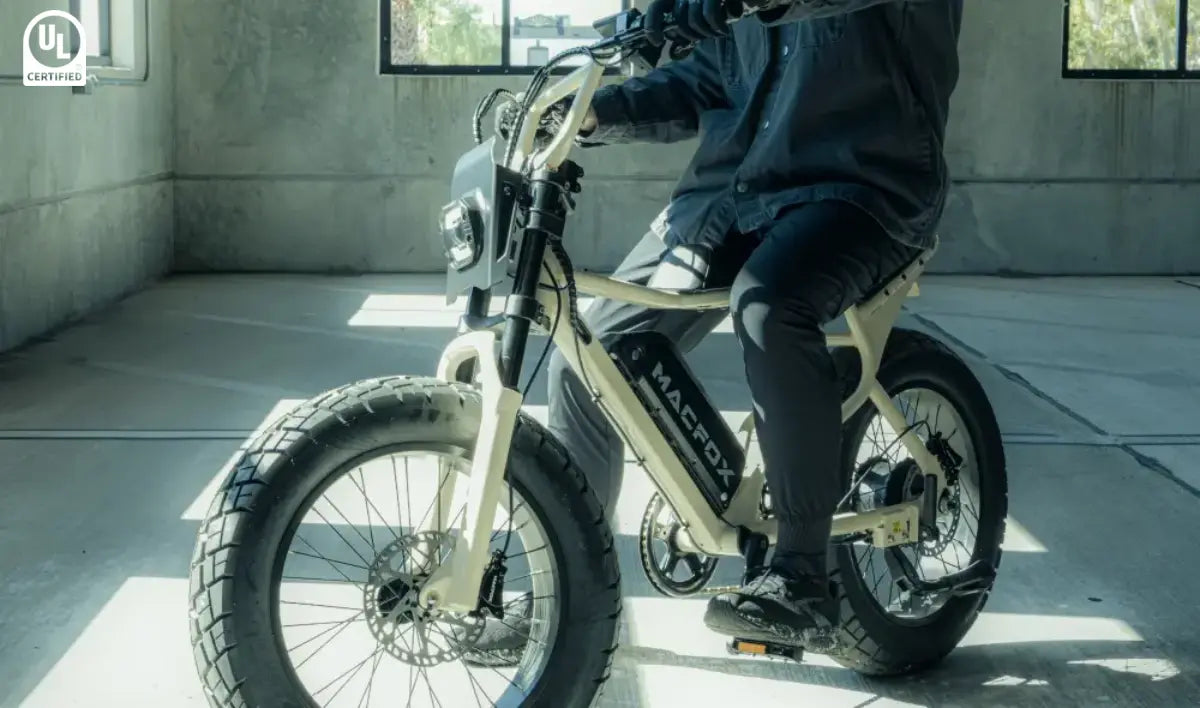
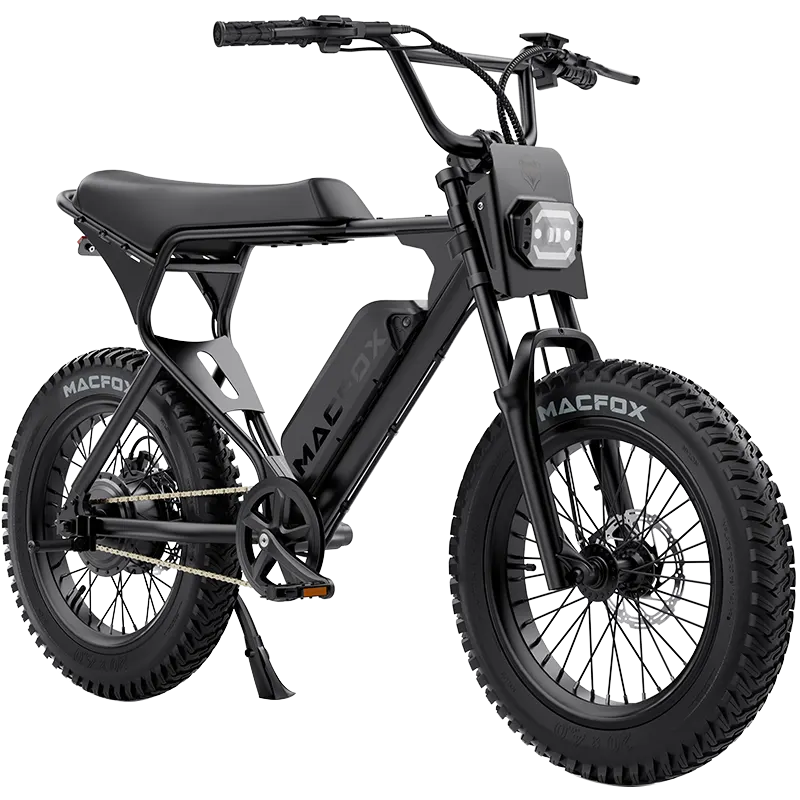
It has a moped-style look and a more relaxed ride feel. For student riders, what makes the Macfox X7 more appealing is not just the appearance, but the way its setup better matches campus use in terms of confidence, stability, and daily ease of use.
The Macfox X7 ebike as a whole is UL 2849 certified, and the single-battery version is also marked as having a UL 2271 certified battery, which feels more reassuring for frequent daily use. It also uses a custom 20×4.5-inch front tire and 20×5.0-inch rear tire, which are wider than those on common city electric bikes, giving it stronger stability and cushioning on campus roads, pavement seams, and shortcut paths that are not perfectly smooth.
On top of that, the X7 version itself uses a curved seat tube design. This kind of frame setup, which makes it easier to get on and gives a more natural riding position, is friendlier for student users than many taller, more hardcore fat tire models.

Conclusion: Which One Is Really the Best Fat Tire eBike?
If you lean more toward daily commuting, the Velotric Nomad 2 feels more natural; if you want a true all-around fat tire bike that can handle mixed terrain, the Aventon Aventure.2 feels very solid; if budget matters most, the Lectric XPeak 2 is a very strong value answer; if you need a folding bike, the Ride1Up Portola is a better fit; if you care more about payload and friendliness for bigger riders, the Himiway Zebra is more convincing; if you want to buy an electric bike for your child, then the Macfox X7 can also be considered as an extra option worth looking at.
Final Note
A lot of people buy fat tire bikes because they “look stable,” but they are also heavier. For people who live in small apartments, need to carry the electric bike, take it into an elevator, or put it in a trunk, this is something you really need to think through in advance. Fat tire electric bikes are very appealing, but they are best suited for people who truly need higher stability and better adaptability to more complex terrain, not for everyone.