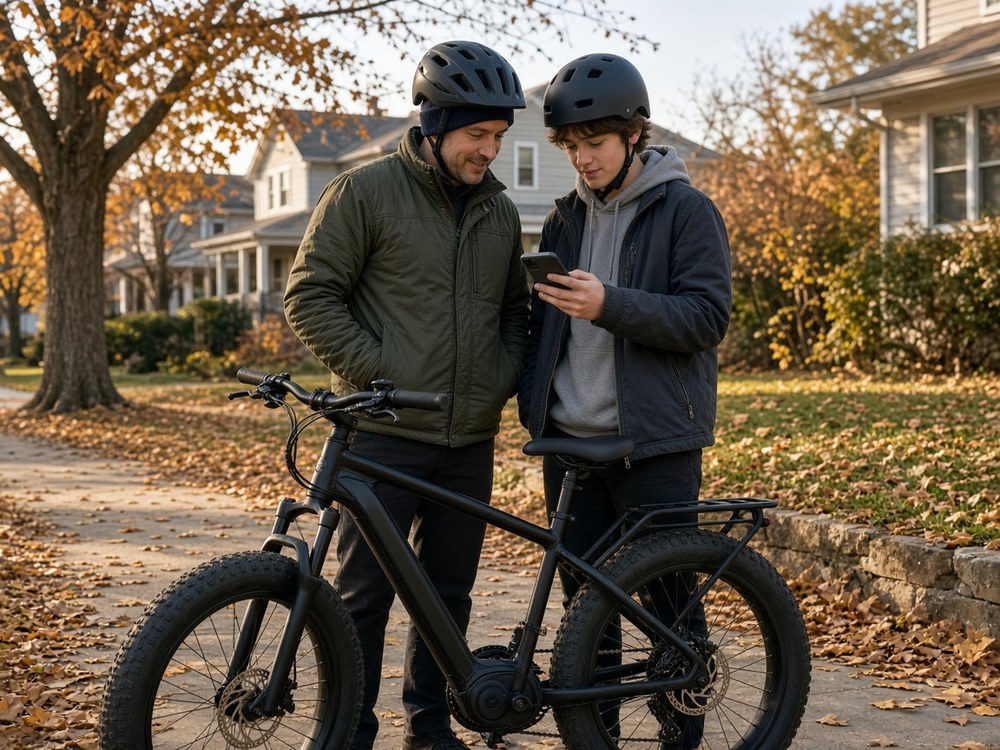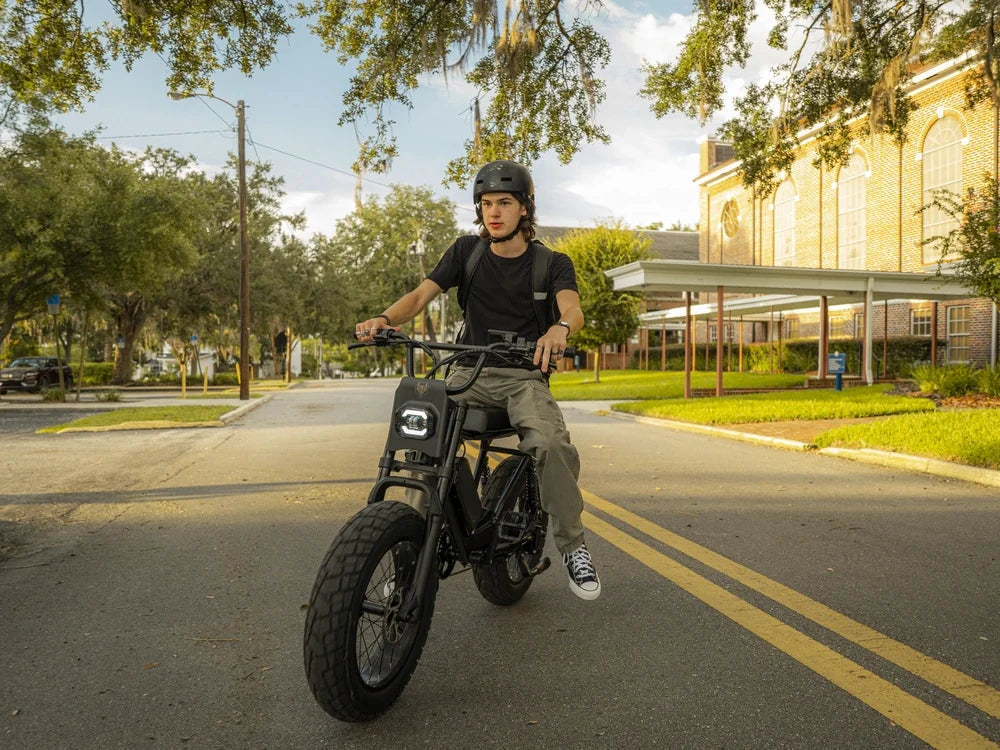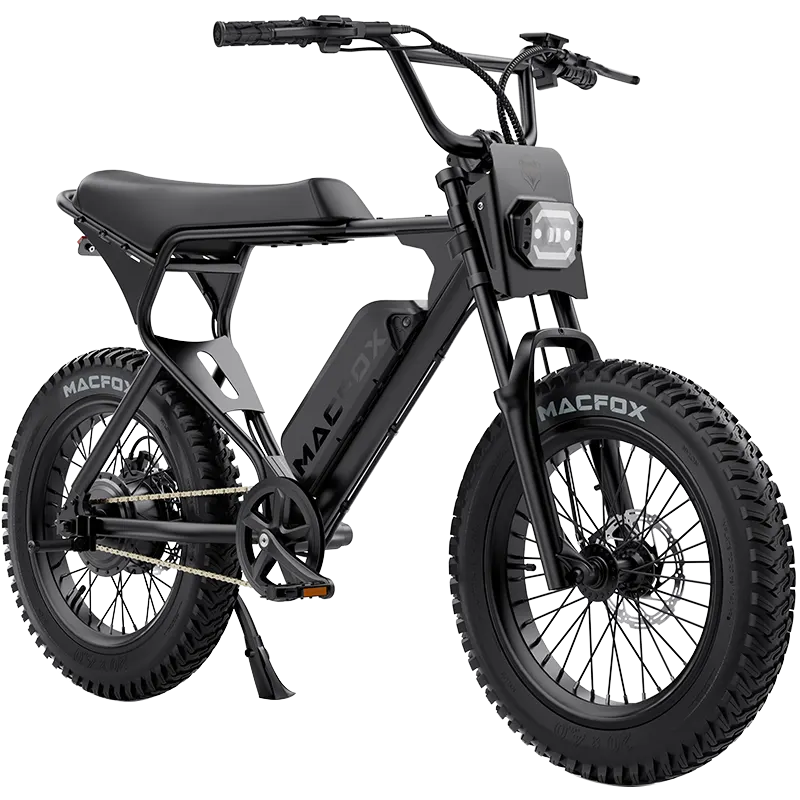

A 750W e-bike is not automatically Class 2, Class 3, off-road, or street legal. Wattage tells you the motor's power rating. Classification depends on how the motor delivers assistance, whether the bike has a throttle, where assistance stops, and which state or local rules apply.
That distinction matters because many riders search for 750W e-bikes while really asking different questions: how fast the bike can go, whether it has a throttle, whether it qualifies as Class 2 or Class 3, whether it needs a license, and whether a controller or voltage change could move the bike outside normal e-bike rules.
If you are comparing electric bikes, start with the label, assisted-speed limit, throttle behavior, controller settings, brakes, and local road or path rules before treating 750W as the whole answer.
750W E-Bike Classification Quick Reference
| Question | Short Answer | What to Check |
|---|---|---|
| Is every 750W e-bike Class 3? | No. A 750W rating alone does not decide the class. | Pedal assist, throttle, assisted speed cutoff, and the class label. |
| Can a 750W e-bike be Class 2? | Yes, if it uses throttle assistance and the motor assistance is limited to the Class 2 speed rule where that class system applies. | Throttle behavior and whether assistance stops at 20 mph. |
| Can a 750W e-bike be Class 3? | Yes, in many class systems, if it is pedal-assist and assistance stops at 28 mph. | Pedal-assist-only operation, speedometer rules, helmet rules, and local access limits. |
| Does 750W mean 28 mph? | No. Speed depends on controller limits, voltage, gearing, rider weight, tires, terrain, battery state, wind, and legal settings. | Published top assisted speed and how the bike is programmed. |
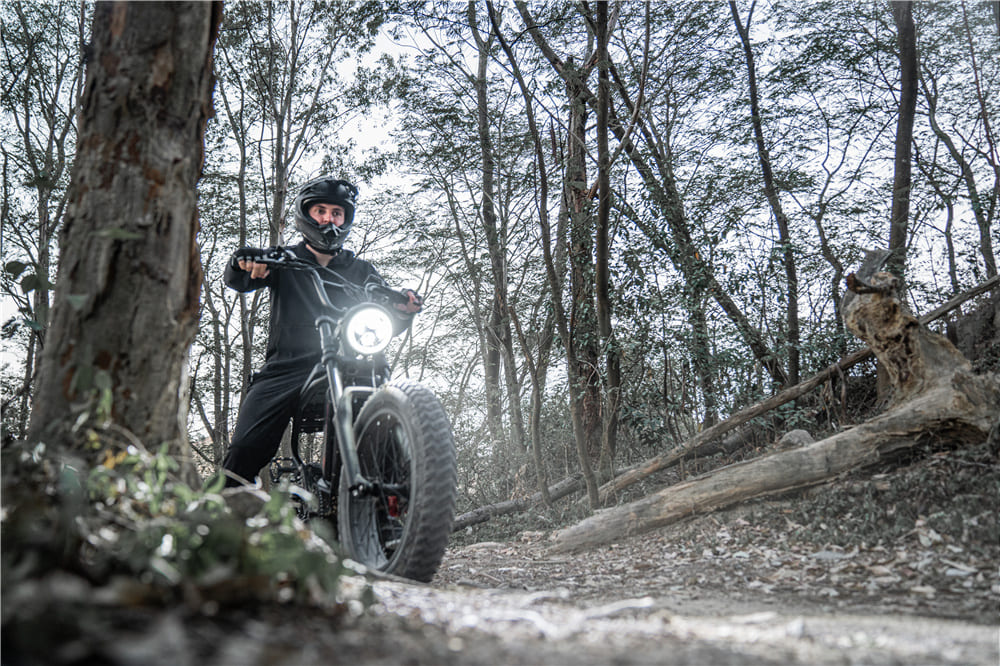
Federal 750W Baseline vs State Class Rules
The federal consumer-product baseline is useful, but it does not answer every road-use question. The CPSC bicycle FAQ and 15 U.S.C. 2085 describe a low-speed electric bicycle around operable pedals, an electric motor below 750 watts, and a motor-only speed below 20 mph on a paved level surface under a defined test condition.
State class systems then decide road, path, age, helmet, label, and speedometer details. That is why a rider should not use the federal 750W number as permission to ride anywhere. For class-by-class details, use Macfox's electric bike class guide.
| Layer | What It Helps Explain | What It Does Not Fully Decide |
|---|---|---|
| Federal low-speed bicycle baseline | Consumer-product treatment for bikes with pedals, below-750W motors, and low motor-only speed under the federal test condition. | Every state path rule, helmet rule, age rule, Class 3 rule, or local trail restriction. |
| State class rules | Whether a bike is treated as Class 1, Class 2, or Class 3 for riding access and equipment requirements. | Whether a modified bike still matches the label after controller, throttle, voltage, or speed changes. |
| Local rules | Path, park, campus, bridge, trail, and city restrictions. | The product's original electrical rating or class label. |
Class 2 vs Class 3: Why Throttle and Speed Matter
Class 2 and Class 3 searches often land on 750W articles because riders assume more wattage means a faster class. The cleaner way to separate them is throttle behavior and assisted speed.
| Category | Common Class Meaning | 750W Note | Risk to Check |
|---|---|---|---|
| Class 1 | Pedal assist only, assistance stops at 20 mph. | A 750W motor can still be limited to a Class 1 style setup where local law recognizes it. | Do not assume the motor rating alone grants trail access. |
| Class 2 | Throttle-capable, motor assistance limited to 20 mph. | 750W commonly appears in throttle e-bike searches, but the speed cutoff is the key point. | Throttle settings can affect where the bike may be used. |
| Class 3 | Pedal assist, assistance stops at 28 mph in many class systems. | 750W can appear in Class 3 searches, but the class depends on assisted speed and control mode. | Class 3 often has more helmet, age, path, and speedometer limits. |
If the main question is throttle behavior, read Macfox's throttle electric bike guide before deciding whether a bike's controls fit your route and local rules.
Motor Power, Voltage, Controller, and Real-World Speed
A 750W label does not guarantee one speed. Motor rating, battery voltage, controller current, tire size, rider weight, hills, wind, and firmware limits all affect how the bike feels. The controller is especially important because it decides how much current reaches the motor and where assistance cuts off.
| Factor | What It Changes | Classification Risk |
|---|---|---|
| Nominal motor rating | The motor's normal rated output under expected operating conditions. | Do not confuse nominal rating with short peak output. |
| Peak output | Short bursts for starts, hills, or load changes. | Peak marketing language can make specs look stronger than the legal class label suggests. |
| Battery voltage | Higher voltage can change how quickly power is delivered and how the system performs under load. | Voltage changes should not be used to bypass speed or class limits. |
| Controller settings | Current delivery, acceleration feel, throttle response, and speed cutoff behavior. | Controller swaps or unlocks can create legal, warranty, heat, and braking problems. |
| Tire and rider load | Rolling resistance, acceleration, hill feel, range, and braking distance. | A heavier or wider-tire setup may feel slower even with the same motor rating. |
For the electrical side of this topic, use Macfox's e-bike controller guide. For speed expectations, use the state e-bike speed limits guide and Macfox's electric bike speed guide.
How to Read a 750W E-Bike Spec Before Buying
A good 750W e-bike listing should make the class, assistance type, top assisted speed, brake setup, battery, controller behavior, payload, and service path clear. If the listing only says 750W without explaining speed cutoff or throttle behavior, keep checking before buying.
- Find the class label: Class 1, Class 2, or Class 3 should be clear where state class rules apply.
- Separate nominal and peak power: 500W nominal with 750W peak is not the same language as 750W nominal.
- Check assisted speed: 20 mph and 28 mph mean different things for access and equipment rules.
- Check throttle behavior: throttle use is central to Class 2 questions and some local restrictions.
- Review controller and modification claims: speed unlocks can change safety, warranty, and legal status.
- Confirm local rules: road, path, trail, school, park, and campus rules can be narrower than the product page.
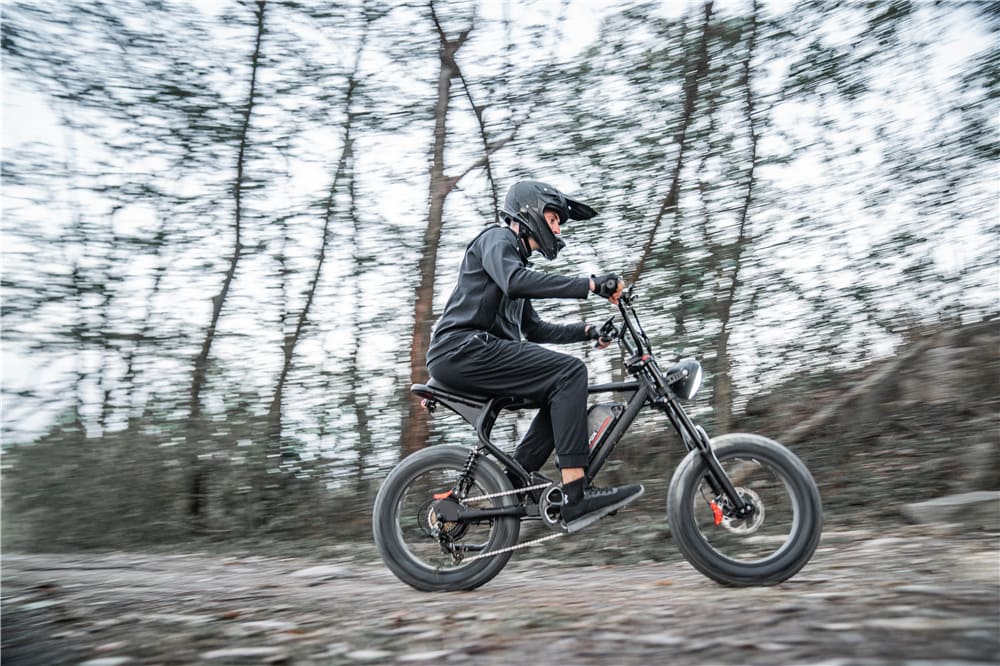
Macfox X1S, X7, and X2 Fit Notes
Macfox X1S, X7, and X2 are useful examples for reading power language without confusing motor output with legal class. Current product information positions X1S and X7 around a 20 mph top speed with a 500W motor and 750W peak output, while X2 is the closer 750W motor example. That does not make any of these models a Class 3 e-bike. Riders should still read nominal power, peak power, assisted speed, throttle behavior, and local class rules as separate details.
| Model | How to Read the Power Spec | Best Use Case | Do Not Assume |
|---|---|---|---|
| Macfox X1S commuter e-bike | Use it as an example of a daily 20 mph e-bike where 750W peak does not equal Class 3. | City errands, campus routes, neighborhood riding, and short commutes. | Do not describe it as a Class 3 e-bike. |
| Macfox X7 fat tire e-bike | Use it as an example of reading 500W motor and 750W peak output alongside speed and route fit. | Riders who want fat tire stability, stronger street feel, and a wider contact patch. | Do not treat peak power as permission to bypass speed or access rules. |
| Macfox X2 electric mountain e-bike | Use it as the direct Macfox 750W motor example, then still check assisted speed, controller behavior, and access rules. | Riders who want full suspension, hydraulic braking, longer range, and rougher-road comfort from a factory-built setup. | Do not assume a 750W motor means Class 3 status, unrestricted trail access, or a speed-unlocked setup. |
Sources and Cost Context
Sources checked on May 12, 2026: the CPSC bicycle FAQ and 15 U.S.C. 2085. These sources explain the federal low-speed electric bicycle baseline; state and local rules still decide many riding-access details. This article is practical guidance, not legal advice.
If you are researching motor cost rather than class, read Macfox's 750 watt electric bike motor price guide next. It is a better fit for replacement cost, motor shopping, and budget questions.
Federal reference links: CPSC bicycle requirements and 15 U.S.C. 2085.
FAQ
Is a 750W e-bike Class 3?
Not automatically. Class 3 usually depends on pedal-assist operation and a 28 mph assisted-speed cutoff where a state class system recognizes that category. Wattage alone does not decide it.
Is a 750W e-bike Class 2?
It can be Class 2 if it has throttle assistance and the motor assistance is limited to the Class 2 speed rule where that system applies. Check the label, controller settings, and local law.
Does a 750W motor make an e-bike faster than a 500W motor?
It can improve acceleration, hill support, or load handling, but it does not guarantee a higher legal assisted speed. Controller settings and speed limits still matter.
Can I make a 750W e-bike faster with a controller change?
You may be able to change performance, but that can create heat, braking, warranty, and legal classification problems. Do not treat controller changes as a normal shortcut to higher speed.
What should I check before buying a 750W e-bike?
Check the class label, throttle behavior, top assisted speed, nominal vs peak power, battery voltage, controller settings, brakes, payload, warranty, and local riding rules.