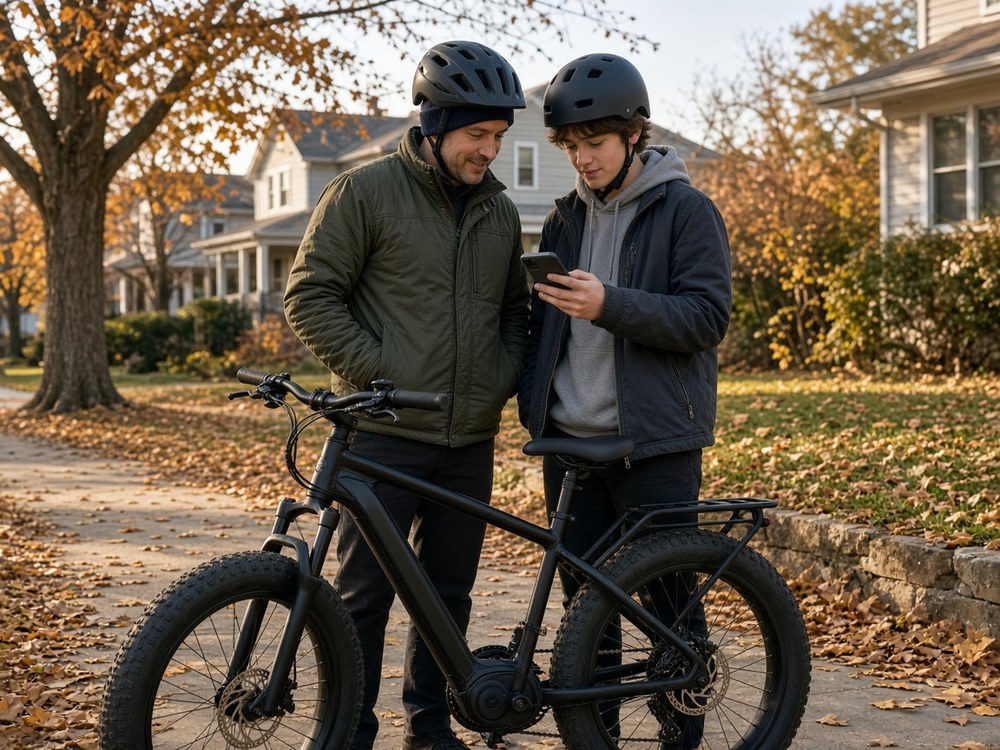

Yes, an e-bike battery can charge a phone, but only when the bike has a built-in USB or USB-C output, or when you use an accessory converter made for low-voltage device charging. The main battery charge port is not a phone charger. If your bike does not clearly list a USB output, the safer answer is to use a separate power bank.
That distinction matters because riders often mean different things when they ask this question. Some want to keep a phone alive for maps. Some want to power a GPS, light, action camera, or speaker. Others see the large e-bike battery and assume it can work like a portable outlet. In practice, phone charging depends on the output hardware between the bike battery and your device, not just the battery size.
Quick Answer: When It Works and When It Does Not
| Situation | Can it charge a phone? | What to check |
|---|---|---|
| Built-in USB or USB-C port on the display, controller area, battery, or stem | Usually yes | Check voltage, amperage, weather sealing, and whether the port stays powered while riding. |
| Approved e-bike accessory converter | Yes, if installed correctly | Use only the voltage range supported by the accessory and bike system. |
| Main battery charging port | No | This port is for charging the e-bike battery with the correct charger, not for powering a phone. |
| No listed USB output | Treat as no | Carry a power bank instead of improvising wiring or adapters. |
How Phone Charging From an E-Bike Battery Works
Your phone expects low-voltage USB power. Most modern phones charge through a 5V USB standard, with higher-speed systems negotiating power through USB-C protocols. An e-bike battery, however, is a high-voltage pack designed to run the motor system. A 36V, 48V, or higher-voltage battery cannot safely feed a phone directly.
A safe phone-charging setup needs a step-down circuit between the battery and the phone. That circuit reduces the battery voltage to USB output and limits current in a way the phone can accept. If that circuit is built into the bike or sold as a compatible accessory, phone charging can be simple. If it is not present, the battery capacity alone does not make the bike phone-ready.
For a deeper explanation of where USB ports can be built into a bike system, see the e-bike USB charging port guide. The important point is that USB output is an added feature, not an automatic feature of every battery.
What to Check Before Plugging In
Before you connect a phone, look for specific output information. The words USB or USB-C are useful, but they are not enough on their own. A good listing, manual, or accessory page should tell you the output voltage, current, port location, and basic use limits.
- Output voltage: phone charging should use a USB-rated output, commonly 5V.
- Output current: a weak port may keep a phone alive but charge slowly, especially with navigation on.
- Port location: ports on displays or stems are easier to use while riding than ports hidden on the battery case.
- Weather protection: a port that works in dry weather may not be safe to use in heavy rain.
- Accessory compatibility: do not mix random adapters with high-voltage e-bike wiring.
If you cannot find those details, do not guess. Contact the manufacturer, check the manual, or use a power bank. A phone is inexpensive compared with the cost of damaging a battery, controller, wiring harness, or display.
Can You Charge a Phone While Riding?
If the USB output is designed to stay active during riding, then yes, you can usually charge a phone while moving. This is the most useful setup for maps, delivery routes, long commutes, and trail navigation. The phone should still be mounted securely, the cable should not touch the wheel, crank, brake lever, or steering path, and the port should not be exposed to water.
The bigger practical issue is cable management. Use a short cable, leave enough slack for steering, and avoid tight bends at the phone connector. If the phone is on the handlebar, vibration can loosen cheap connectors or stress the charging port. A secure mount and weather-aware cable routing matter as much as the electrical output.
If charging keeps cutting in and out, stop using the port until you identify the cause. Intermittent charging can come from a loose cable, a wet port, a damaged phone connector, or an accessory drawing more power than the bike output can supply.
How Much Range Does Phone Charging Use?
For a normal smartphone, the range impact is usually small. A phone battery often stores roughly 10 to 20 watt-hours of energy, while an e-bike battery may store hundreds of watt-hours. In simple terms, fully charging a phone is normally a tiny fraction of the bike battery.
That does not mean the range impact is always zero. If you are riding in cold weather, climbing hills, using high assist, carrying cargo, or already near the end of the battery, every watt-hour matters. Navigation also keeps the screen, GPS, and cellular connection active, so the phone may use power while it charges. For a short commute, the difference is minor. For a long ride where you are already planning battery stops, do not rely on phone charging as if it has no cost.
Riders using larger packs or spare packs can compare the tradeoff with the dual-battery e-bike guide, but a second battery should be planned for riding range first. Treat phone charging as a small convenience, not the reason to buy more battery capacity.
Safety Mistakes to Avoid
The riskiest mistake is trying to adapt the battery charge port into a phone charger. That port is built for the correct e-bike charger and battery management system. It is not a universal power outlet. Using random converters, stripped wires, or bargain adapters can damage electronics and may create heat or short-circuit risks.
Keep the bike battery and charger rules separate from phone charging. If your main question is how to charge the bike battery itself, use the safe e-bike charging guide. If you are comparing the types of chargers used for the bike, use the e-bike charger types guide. Those are different problems from powering a phone through a USB output.
- Do not charge a phone from the e-bike battery charge port.
- Do not open the battery case to add a phone charger.
- Do not use exposed wiring near rain, sweat, or road spray.
- Do not route cables where they can interfere with braking or steering.
- Do not assume a USB port is waterproof unless the manual says so.
When a Power Bank Is the Better Choice
A separate power bank is often better when the bike has no verified USB output, when you ride in wet conditions, when you use a phone mount far from the port, or when you want the phone to keep charging after you park the bike. It also avoids pulling power from the ride battery on long routes.
For commuting, a compact power bank in a frame bag or backpack is usually enough. For touring, delivery work, or all-day navigation, choose a higher-capacity bank and keep it dry. The advantage is simple: the power bank is designed to charge phones, while the e-bike battery is designed to power the bike.
What Macfox Riders Should Do
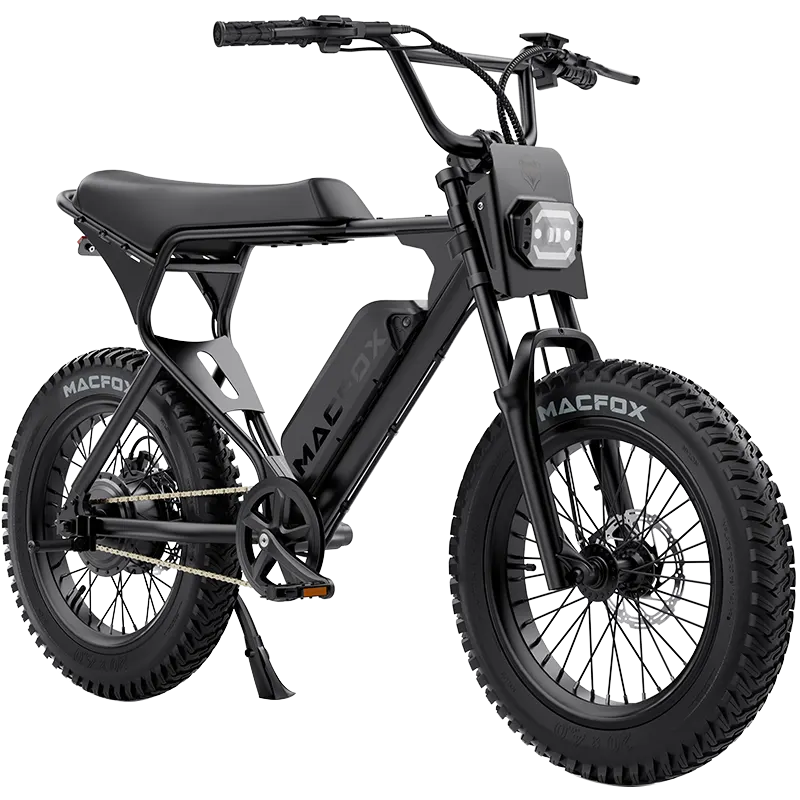
If you ride one of Macfox's electric bikes, verify the exact model page, display details, accessory page, or owner's manual before treating the bike as a phone power source. If a USB output is not listed, do not assume one exists. Use a power bank instead, and keep the bike battery reserved for range, motor support, and safe riding.
This is especially important when product pages change over time or when riders compare older and newer versions of the same model. A feature on one display, accessory, or battery setup does not prove that every bike with a large battery can charge a phone.
What About Fast Charging?
Fast charging is helpful, but it is not required for most rides. A low-output USB port may be enough to slow battery drain while maps are open, even if it does not refill the phone quickly. A higher-output port can be useful for a phone with a bright screen, cold weather, or long navigation sessions, but only if the bike system is designed for that output. Do not chase fast charging by using unapproved adapters. Stability, cable safety, and weather protection matter more on a moving bike than maximum charging speed.
FAQ
Can I plug my phone into the e-bike charging port?
No. The battery charging port is for the correct e-bike charger. Use only a built-in USB output or a compatible accessory made for device charging.
Will charging my phone drain the e-bike battery quickly?
Usually no, because a phone battery is small compared with an e-bike battery. Still, it can matter on cold, hilly, high-assist, or low-battery rides.
Is USB-C better than USB-A on an e-bike?
USB-C can support stronger charging when the bike's electronics are designed for it, but the port label alone is not enough. Check the listed output and use a quality cable.
What if my phone gets wet while charging?
Unplug it and dry the phone, cable, and port. Do not keep charging through exposed connectors in heavy rain unless the bike system is specifically rated for that use.
Bottom Line
An e-bike battery can charge a phone only through the right low-voltage output. If the bike has a verified USB or USB-C port, phone charging can be useful for navigation and long rides. If it does not, do not improvise. Carry a power bank, protect your cables, and leave the main battery system to power the bike.