
Yes, Maryland recognizes e-bikes, but the legal answer depends on the class of the bike, where you ride, the rider's age, and whether the bike still matches its original assisted-speed label. A qualifying Maryland e-bike must have operable pedals, two or three wheels, and a motor rated at 750 watts or less.
For most riders, the key rule is simple: Maryland generally allows e-bikes where bicycles are allowed, including bike lanes, but Class 3 e-bikes and natural-surface trails have extra restrictions. Local authorities and state agencies can also set more specific path or trail rules, so signs and local guidance still matter.
Maryland E-Bike Laws at a Glance
| Question | Short answer | What to check |
|---|---|---|
| Are e-bikes legal in Maryland? | Yes, if the bike fits Maryland's electric bicycle definition. | Pedals, two or three wheels, 750W or less, and a recognized class. |
| Do e-bikes need a license? | A qualifying e-bike does not need a special driver's license just to be ridden as an e-bike. | If the bike no longer fits the e-bike definition, rules can change. |
| Can e-bikes use bike lanes? | Generally yes, where bicycles are allowed. | Local restrictions and posted signs can still apply. |
| Can Class 3 e-bikes use bike paths? | Only in specific situations or when allowed by the authority with jurisdiction. | Check whether the path is in or next to a highway right-of-way. |
| Can riders under 16 use Class 3? | They may not operate a Class 3 e-bike on a public highway. | They may ride as passengers if the bike is designed for passengers. |
Maryland E-Bike Classes
Maryland uses the familiar three-class e-bike system. The class is not just a marketing label; it affects access, age rules, equipment, and how the bike should be labeled.
| Class | Motor behavior | Assisted-speed limit |
|---|---|---|
| Class 1 | Pedal-assist only; the motor assists when the rider pedals. | Assistance stops at 20 mph. |
| Class 2 | Motor assistance can work whether or not the rider is pedaling. | Assistance stops at 20 mph. |
| Class 3 | Pedal-assist only; the motor assists when the rider pedals. | Assistance stops at 28 mph. |
If the difference between Class 1, Class 2, and Class 3 still feels blurry, use the e-bike class guide. If your bike has a throttle, also compare it with the throttle electric bike guide, because throttle behavior is one of the easiest details for riders to misunderstand.
Where Can You Ride an E-Bike in Maryland?
Maryland law says electric bicycles may be operated where bicycles are allowed to travel, including bike lanes, subject to specific path and trail limits. That broad permission does not mean every path, park, trail, sidewalk, campus, or county facility is automatically open to every e-bike class.
- Roads and bike lanes: e-bikes are generally allowed where bicycles may travel, unless a more specific rule applies.
- Bicycle paths: Class 1 and Class 2 e-bikes can be prohibited by the local authority or state agency with jurisdiction over the path.
- Class 3 on bicycle paths: Class 3 e-bikes are restricted unless the path is within or adjacent to a highway right-of-way, or the authority with jurisdiction allows them.
- Natural-surface trails: a local authority or state agency can regulate e-bike use on nonmotorized natural-surface trails.
- Local rules: counties, cities, parks, schools, campuses, and trail managers may post rules that are more specific than the statewide baseline.
For trail-specific planning, continue with the Maryland e-bike trails guide. Keep the statewide legal baseline separate from route-by-route access decisions, because a park, county, or trail manager may post more specific rules.
Helmet and Age Rules
Maryland requires riders under 16 to wear a bicycle helmet. Adults should still wear a properly fitted helmet, especially on faster Class 3 rides, night rides, crowded bike lanes, and rough paths.
The important Class 3 age boundary is separate from the general helmet rule. A person under 16 may not operate a Class 3 e-bike on a public highway. Maryland law does allow a person under 16 to ride as a passenger on a Class 3 e-bike if the bike is designed to accommodate passengers.
License, Registration, and Insurance
For a bike that fits Maryland's legal e-bike definition, a special e-bike driver's license, state vehicle registration, and auto-style insurance are not the normal requirement. That is one reason the 750W cap, pedals, class label, and assisted-speed limit matter so much.
If a bike is modified beyond its class, advertised as a high-speed off-road machine, or used like a motorized vehicle on public roads, do not assume it still fits the e-bike category. The e-bike vs e-moto guide explains how to separate a qualifying e-bike from an e-moto or electric motorcycle-style product.
Labels, Speedometers, and Modifications
Maryland requires electric bicycles to carry a permanent label showing the class, top assisted speed, and motor wattage. That label helps riders, parents, shops, trail managers, and enforcement officers understand what type of e-bike they are looking at.
- Do not ignore the label. It should identify class, assisted speed, and motor wattage.
- Do not modify speed casually. If a modification changes the motor-powered speed capability, the classification label must be corrected.
- Class 3 needs a speedometer. Maryland requires a Class 3 e-bike to display speed in miles per hour.
- Brake and pedal cutoffs matter. The motor must disengage when brakes are applied, and Class 1 or Class 3 assistance must stop when the rider stops pedaling.
Speed claims also need legal context. For a broader comparison of assisted-speed limits across the U.S., use the e-bike speed limit guide; for state-by-state legal differences, use state-by-state e-bike regulations.
Buying or Riding a Macfox E-Bike in Maryland
When comparing electric bikes for Maryland riding, start with the current product page, label, motor rating, assisted-speed behavior, and where you plan to ride. A commuter route, a bike-lane commute, and a natural-surface trail day can lead to different legal and practical checks.
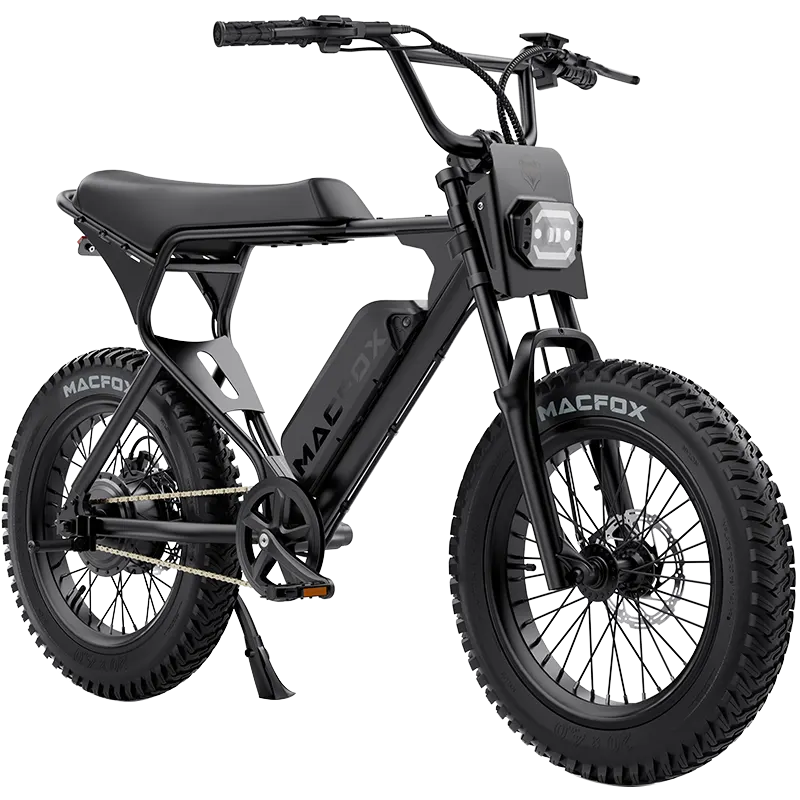
The Macfox X1S commuter e-bike is the more natural reference for daily commuting and city riding. The Macfox X2 electric mountain bike is more relevant when a rider is thinking about rougher terrain or stronger suspension, but Maryland path and trail access should still be checked before assuming any route is open.
For any model, confirm the current specs and do not rely on old blog pricing or outdated product claims. The legal question is not just which model looks right; it is whether the bike's class, assisted speed, and riding location match Maryland's rules.
Maryland Pre-Ride Checklist
- Confirm the e-bike class. Class 1, Class 2, and Class 3 do not have identical access rules.
- Check the label. Look for class, top assisted speed, and motor wattage.
- Check rider age. Riders under 16 cannot operate Class 3 e-bikes on public highways.
- Wear a helmet. Required under 16 and strongly recommended for everyone.
- Read path and trail signs. Local rules can override the general expectation.
- Do not ride a modified bike as if nothing changed. Speed or controller changes can affect classification.
Official Maryland References to Check
Rules can change, and local access can be more specific than the statewide baseline. For legal details, check Maryland's official statute pages for electric bicycle definitions, operation rules, equipment and label rules, and Maryland helmet guidance.
FAQ
Are e-bikes street legal in Maryland?
Yes, qualifying e-bikes are generally allowed where bicycles may travel, including bike lanes. The bike must fit Maryland's e-bike definition, and local or path-specific restrictions can still apply.
Do you need a license for an electric bike in Maryland?
A qualifying Maryland e-bike does not normally require a special driver's license just to be ridden as an e-bike. If the bike no longer fits the legal definition, the answer can change.
Can a Class 3 e-bike use Maryland bike paths?
Class 3 e-bikes are more restricted on bicycle paths. They may be allowed when the path is within or adjacent to a highway right-of-way, or when the local authority or state agency with jurisdiction permits them.
Do adults have to wear helmets on e-bikes in Maryland?
Maryland's statewide bicycle helmet requirement applies to riders under 16. Adults should still wear a helmet, especially for Class 3 speeds, busy roads, and trails.
Can a child ride a Class 3 e-bike in Maryland?
A person under 16 may not operate a Class 3 e-bike on a public highway. A younger person may ride as a passenger on a Class 3 e-bike that is designed to carry passengers.
Are e-bikes allowed on Maryland trails?
It depends on the trail and the agency or local authority that manages it. Natural-surface nonmotorized trails can have specific e-bike rules, so check posted signs and the trail manager before riding.
Bottom Line
Maryland's e-bike rules are workable once you separate class, location, rider age, and bike labeling. Class 1 and Class 2 are usually easier for everyday bicycle-style access. Class 3 gives a higher assisted-speed limit but comes with more path and age restrictions. Before you ride, confirm the bike's label, keep the speed behavior legal, wear a helmet, and check local signs for the road, path, or trail you plan to use.