

Google Maps can show bike lanes, bike paths, bicycle-friendly roads, and cycling directions where biking data is available. It is useful for planning a bike or e-bike route, but it is not a complete safety check. Before you ride, compare the suggested route with local signs, road conditions, e-bike class rules, and your battery range.
If you are looking for a quick answer: turn on the Biking layer to see bike paths, use the bicycle icon in Directions for cycling routes, and treat Google Maps cycling time as an estimate. Google does not publish one fixed bicycle speed in its public Maps Help pages, so do not assume the ETA matches your exact pace, e-bike speed, traffic stops, hills, or trail surface.
Quick Answers for Google Maps Bike Mode
| Question | Short Answer | What to Do Next |
|---|---|---|
| Does Google Maps show bike lanes? | Yes, when biking data is available for that area. | Open Google Maps and turn on the Biking layer from Layers. |
| How do I turn on bike mode? | Use Directions, enter a start and destination, then choose the bicycle icon. | If the bicycle icon is missing, try another route, update the app, or check on desktop. |
| What speed does Google Maps use for biking? | Google does not give riders one public fixed mph setting. | Use the ETA as a planning estimate and add margin for stops, hills, road crossings, and battery use. |
| Why is Google Maps bike mode not showing? | The route, region, app version, or map data may not support cycling directions. | Check the Biking layer, try a nearby endpoint, and compare local cycling maps. |
How to Show Bike Lanes on Google Maps
On desktop, open Google Maps, point to Layers, choose More, and select Biking. Google's own Maps layer help says the Biking layer can show bike paths and explains the meaning of the cycling colors.
On mobile, open the Google Maps app, tap Layers, and choose the Bicycling map detail if it is available. Google's mobile layer help also notes that some layers may be unavailable when there is not enough information for an area.
| Map Marking | Meaning | E-Bike Planning Note |
|---|---|---|
| Dark green | Trails without auto traffic. | Check whether e-bikes are allowed and whether the trail surface fits your tires. |
| Green | Dedicated bike lanes on roads shared with cars. | Good for city riding, but still check door zones, intersections, and traffic speed. |
| Dotted green | Bicycle-friendly roads without a dedicated lane. | Useful as a clue, not a guarantee of comfort or safety. |
| Brown or dashed dark green | Unpaved or off-road paths depending on platform and region. | Confirm surface, access rules, and whether your e-bike is suitable for dirt or gravel. |

How to Activate Bicycle Mode in Google Maps Directions
The Biking layer and bicycle directions are related, but they are not the same thing. The layer helps you inspect bike paths on the map. Directions creates a route from point A to point B.
Google's directions help says you can get directions for several travel modes, including cycling, and that cycling routes are available only in supported countries or regions. For riders, the practical steps are:
- Open Google Maps.
- Enter your destination.
- Tap or click Directions.
- Choose the bicycle icon.
- Compare the route, distance, elevation if shown, road type, and any confusing turns before starting.
If the route sends you toward a road that feels too fast, too narrow, or legally uncertain, do not follow it blindly. For commute planning, compare the time estimate with Macfox's biking-to-work distance guide and choose a route you can repeat comfortably.
What Speed Does Google Maps Use for Biking?
Google Maps shows cycling travel time, but Google does not publish one fixed public number such as "10 mph" or "12 mph" for every bike route in its consumer Help pages. The safer way to read the estimate is as a route-specific planning estimate.
Your real time can change because of traffic lights, stop signs, hills, bridge crossings, headwinds, crowded paths, rough pavement, rail crossings, and your own riding style. On an e-bike, motor assistance can help with starts and hills, but it does not remove red lights, local speed rules, shared-path etiquette, or battery limits.
| Factor | Why Your Time May Change | Better Planning Habit |
|---|---|---|
| Stops and intersections | Short urban routes can lose time at every light. | Add buffer time for commuting, school drop-offs, and appointments. |
| Hills and bridges | Climbing, wind, and bridge approaches can slow average speed. | Preview elevation and battery demand before the ride. |
| Surface | Gravel, sand, broken pavement, and unpaved trails change comfort and speed. | Use satellite view and local trail pages when the route leaves pavement. |
| Legal access | Some paths, parks, or roads limit e-bike classes. | Check Macfox's state e-bike laws guide and posted local rules. |
Why Google Maps Bike Mode May Not Be Showing
If Google Maps bike mode is not showing, it usually does not mean you did anything wrong. It often means the route or region does not have supported cycling data, the selected trip cannot be routed as a bike trip, or the app interface is hiding the option for that search.
Try these checks before assuming there is no bike route:
- Switch from route mode to map layer mode: use Layers > Biking to inspect nearby paths even if Directions does not return a cycling route.
- Move the start or end point slightly: a highway, private road, park entrance, or disconnected path can block a route.
- Check desktop and mobile: sometimes the interface is easier to read on desktop when planning a longer ride.
- Update the app: an old app version can create display problems.
- Use local sources: city bike maps, state DOT bike maps, trail associations, and park pages can confirm access more clearly than a general map.
For e-bike riders, also check road access before using a fast road as a shortcut. Macfox's e-bike highway access guide explains why freeways, shoulders, and controlled-access roads need extra caution.

Better E-Bike Route Checks Before You Ride
A good e-bike route is not just the shortest line on a map. It should match your bike, your comfort level, the local rules, and the surface you will actually ride.
- Look for repeatable roads: a slightly longer route with bike lanes may be better than a shorter route through stressful traffic.
- Check battery margin: hills, cold weather, high assist levels, cargo, and stop-start riding can reduce range.
- Preview unpaved sections: if Google marks an off-road path, confirm whether the surface fits your tires and whether e-bikes are allowed.
- Plan the return trip: a route that feels easy downhill may feel very different on the way back.
- Keep a backup route: construction, road closures, park rules, and traffic incidents can change a planned ride.
If your goal is daily commuting, start with Macfox's commuter e-bike guide and budget commuter e-bike guide to match route length, cargo, parking, and weather needs before choosing a bike.
Macfox Fit for Google Maps Bike Routes
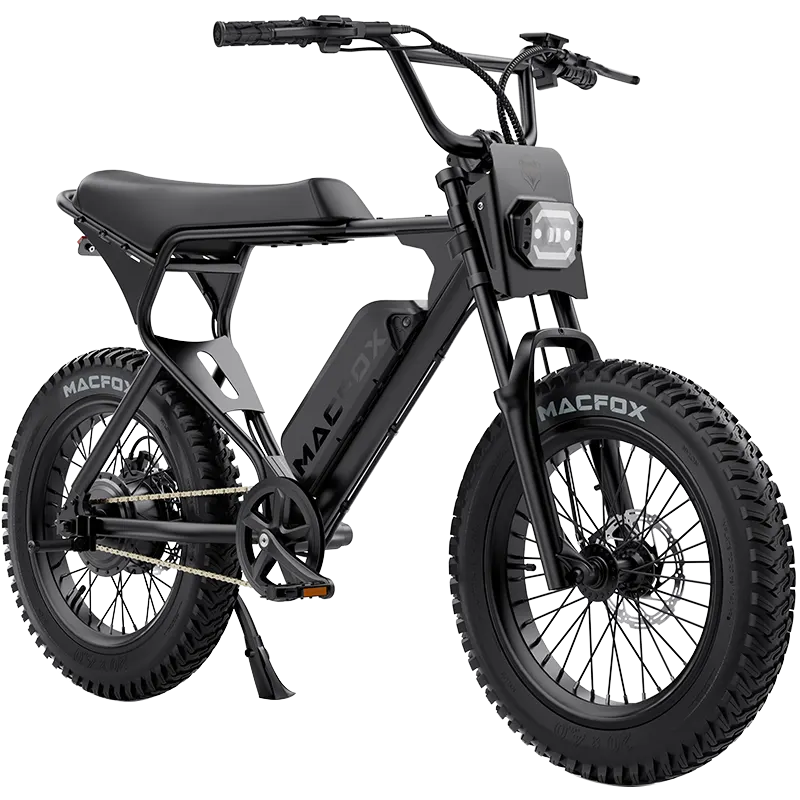
For city routes with bike lanes, neighborhood streets, and regular errands, the Macfox X1S commuter e-bike is the cleaner fit. It makes sense when your Google Maps route is mostly pavement, campus paths, local streets, or a daily commute where comfort and predictable handling matter more than trail capability.
If your route includes rough pavement, uneven shoulders, hardpack paths, or mixed local surfaces where e-bikes are allowed, the Macfox X7 fat tire e-bike is the stronger comparison point. Wider tires can add confidence on imperfect surfaces, but they do not turn every trail, park path, or highway shoulder into a legal e-bike route.
Use the full electric bikes collection only after the route is clear. The route should decide the bike, not the other way around.
When Google Maps Is Not Enough
Google Maps is a strong starting point, especially for bike lanes and familiar city routes. For longer rides, gravel routes, parks, and trail systems, compare it with a second source before you leave.
Useful backup sources include local city cycling maps, state DOT bicycle maps, park or trail manager pages, Bikemap, Strava routes, Ride with GPS, and recent rider comments for trail closures or surface changes. The goal is not to replace Google Maps. It is to confirm the parts of the route that matter most to a rider: access, surface, traffic stress, and where you can safely stop.

Planning bike-lane commutes? Compare our Class 2 electric bikes, built for everyday routes at up to 20 mph.
FAQ
How do I show bike lanes on Google Maps?
Open Google Maps, choose Layers, select More if needed, and turn on Biking. On mobile, tap Layers and choose Bicycling if that map detail is available in your region.
How do I add bicycle mode to Google Maps?
You usually do not add it manually. Search for a destination, tap Directions, and choose the bicycle icon when cycling directions are supported for that route and region.
Why is Google Maps not showing the bike option?
The bike option may be missing because cycling directions are unavailable for that country, region, road, or route. Try the Biking layer, adjust the start or end point, update the app, or compare a local cycling map.
What speed does Google Maps use for biking?
Google Maps does not publish one fixed cycling speed in its public consumer Help pages. Treat the displayed time as an estimate and add margin for stops, hills, traffic, surface, and e-bike battery use.
Does Google Maps work for e-bikes?
It can help e-bike riders find bike lanes and routes, but it does not replace local e-bike class rules, trail access signs, or road safety judgment. Always confirm whether e-bikes are allowed on the path or road you plan to use.
Are Google Maps bike routes always safe?
No. A suggested route can include busy roads, poor shoulders, construction, steep hills, or paths that are uncomfortable for your bike. Preview the route and choose the option that fits your skill, equipment, and local rules.










1 thought on “Google Maps Bike Mode: Show Bike Lanes, Cycling Speed, and Route Fixes”
Wayne Silva
So far everything I see on line it’s just too confusing to figure out. To difficult to find a bicycle route, for example Albuquerque to Santa Fe nothing is straightforward on all of these sites and I’m sure some people will say that they had no problem at all, but not everybody is computer savvy.