

North Carolina can be excellent for e-bike riding, but the right route depends on the land manager, posted trail rules, surface type, and your bike setup. The safest answer is not to assume every bicycle trail allows every e-bike. Pick routes that clearly allow bicycles or motorized access, check the latest posted rules, and avoid trails where e-bikes are specifically restricted.
This guide focuses on practical places to start and the checks to make before you ride. It does not try to list every trail in the state. North Carolina has mountain routes, forest roads, OHV areas, greenways, coastal paths, and city connectors, and each category can treat e-bikes differently.
Quick Answer: Where Can You Ride an E-Bike in North Carolina?
| Route type | Good fit for e-bikes? | What to check first |
|---|---|---|
| Paved greenways and city multi-use paths | Often a practical starting point. | Local signs, speed limits, pedestrian traffic, and whether e-bikes are allowed. |
| State park bike routes | Possible when bikes are designated and posted rules allow it. | Class limits, trail designation, park-specific notices, and seasonal closures. |
| OHV or motorized trail systems | Best fit for riders who want clearly motorized trail access. | Permit or pass requirements, open dates, trail difficulty, and protective gear. |
| Natural-surface singletrack trails | Mixed. Some allow e-bikes, some do not. | Current land-manager rules before unloading the bike. |
| DuPont State Recreational Forest | Do not treat it as an e-bike trail. | Current official policy before visiting; e-bikes are restricted there. |
If you are comparing ordinary bicycle routes as well as e-bike routes, use the North Carolina bike trails guide. This page stays narrower: it is about North Carolina e-bike riding and the extra rule checks e-bike riders need.
Before You Pick a Trail: Four Checks
- Check the land manager. A city greenway, state park, national forest, and private trail system can all have different e-bike rules.
- Check the bike class and posted signs. Some places distinguish between Class 1, Class 2, and Class 3 e-bikes.
- Check the surface and grade. A paved path, gravel road, and technical singletrack require different tires, braking habits, and battery planning.
- Check distance, weather, and cell coverage. A route that looks short on a map can feel much longer in heat, rain, or rolling terrain.
For the broader legal background, use the North Carolina e-bike laws guide. For the general question of whether e-bikes are allowed on trails at all, use the e-bikes on trails guide. This page only uses those rules as a filter for North Carolina ride planning.
Uwharrie and Badin Lake OHV: Best for Motorized Trail Access
Riders looking for a more rugged, motorized trail environment should look at the Uwharrie area and the Badin Lake OHV trail system first. It is not the same experience as a casual paved greenway. Expect rougher surfaces, changing conditions, permit or pass requirements, and a stronger need for preparation.
This is where route planning matters. Check whether the trail system is open, confirm the current pass requirement, and review trail difficulty before you go. Bring water, a repair kit, a charged phone, and a route plan. If your bike is not built for rough surfaces, choose an easier greenway or paved route instead of forcing a trail ride.
East Coast Greenway and Triangle-Area Greenways
For smoother e-bike rides, paved greenways and longer urban connectors are often better than remote natural-surface trails. North Carolina has East Coast Greenway segments, Triangle-area greenways, city paths, and mixed on-road connectors that can work well for riders who want scenery without technical singletrack riding.
The tradeoff is traffic and shared use. Slow down near walkers, children, dogs, blind corners, bridges, and road crossings. A route may be legal and still not be comfortable during peak hours. For a first ride, pick a shorter out-and-back segment and learn the surface, traffic, and battery use before committing to a full-day route.
A good greenway plan also includes a simple exit point. Choose a segment with parking, bathrooms, water, or a nearby road connection before you test a new area. That keeps the ride flexible if the path is crowded, the weather shifts, or your battery estimate drops faster than expected.
NC State Parks: Use Posted Bike Access Rules
North Carolina state parks can be appealing because they are scenic and managed, but e-bike access still depends on where bicycles are allowed and what the park posts. Do not assume that an e-bike can go on a hiking trail just because the bike has pedals. Start with designated bike routes, paved paths, or areas where bikes are already allowed.
When rules mention e-bike classes, treat them seriously. A Class 1 or Class 2 rule is not the same as open access for every powered bike. If you are unsure, ask the park office before riding instead of relying on a blog post or an old forum thread.
Also separate access from etiquette. Even where a route allows your bike, you still need to ride at a speed that fits the trail. Yield early, announce passes, avoid cutting corners, and stop if the trail surface is soft enough that tires leave deep ruts.
DuPont State Recreational Forest: Do Not Treat It as an E-Bike Trail
The original version of this article listed DuPont State Recreational Forest as an e-bike destination. That is not a safe recommendation. DuPont is a popular biking area, but e-bikes are restricted there under current posted guidance. Keep it off your e-bike route list unless the official policy changes.
This is the kind of mistake that makes trail pages age badly. A location can be excellent for bicycles and still be wrong for an e-bike. For every route, check the current source closest to the trail: park office, forest service page, city greenway page, trailhead sign, or posted map.
How to Choose the Right Route by Bike Setup
| Bike setup | Better route choice | Avoid this mismatch |
|---|---|---|
| Commuter-style setup | Paved greenways, low-stress city connectors, short scenic rides. | Technical singletrack or rough OHV trails. |
| fat tire e-bike | Gravel, rough pavement, packed dirt, and mixed-surface routes where access is allowed. | Assuming tire width overrides posted trail restrictions. |
| long-range e-bike | Longer greenway segments, out-and-back routes, and day rides with known charging or return points. | Starting a remote route without battery margin. |
| Trail-oriented setup | Permitted motorized or e-bike-friendly natural-surface routes. | Riding restricted singletrack trails because they look rideable. |
If you are still choosing an electric bike, match the bike to the route first. A smooth greenway rider does not need the same setup as someone planning rough forest roads, steep grades, or loose gravel.
What to Pack for a North Carolina E-Bike Ride
North Carolina weather can shift quickly between mountain, Piedmont, and coastal areas. Pack water, a tire repair kit, a small pump, a basic multi-tool, a phone, lights, and a way to navigate if cell coverage drops. For longer routes, carry more battery margin than you think you need because hills, headwind, heat, and soft surfaces can reduce range.
Use the scenic e-bike routes guide if you want broader route inspiration, then bring the planning back to the specific North Carolina rule check. A beautiful route is only useful if your e-bike is allowed, the surface matches your bike, and you can finish the ride safely.
More North Carolina Routes
Beyond the greenways and state parks above, these routes add mountain, Piedmont and coastal variety. As always, confirm e-bike access with the managing agency before you ride.
Blue Ridge Parkway
A legendary scenic road with long climbs, sweeping overlooks and very little shoulder. Pedal assist makes the grades far more approachable. Ride in daylight with lights on, and plan charging around the climbs near Asheville and Boone.
Western Mountains: Big Ivy and Pisgah
Forest roads in the Big Ivy area near Asheville climb through hemlock and creek valleys toward Blue Ridge Parkway overlooks. Much of the natural-surface trail system in Pisgah National Forest is closed to e-bikes, so stick to roads and routes where e-bikes are clearly allowed.
Thermal Belt Rail Trail
A paved rail-trail of about 13.6 miles through Spindale, Rutherfordton and Forest City, passing restored depots and former mill towns. It's flat, quiet and well suited to a relaxed ride.
Neuse River Greenway Trail
Some 27 paved miles along the Neuse River on Raleigh's east side, with boardwalks, suspension bridges and wetlands. It's part of the larger Triangle greenway network described above.
Falls Lake State Recreation Area
Lakeside roads and connecting greenways around Falls Lake near Wake Forest make an easy spring ride. Natural-surface trails in the recreation area have their own access rules, so check before riding them.
Uwharrie and Badin Lake
The Uwharrie region's forest roads and the motorized Badin Lake trail network suit riders who want a rougher, more remote feel. See the Uwharrie notes above for permits and access.
Coastal Routes: Crystal Coast and Outer Banks
Flat roads and multi-use paths link beach towns along the Outer Banks, with lighthouse and sound-side views. Wind, sand on the pavement and summer traffic are the main challenges; fat tires add stability on sandy shoulders. Near New Bern, East Coast Greenway segments add quieter inland miles.
Tobacco Heritage Trail (Virginia border)
Just north of the state line in Southern Virginia, this developing rail-trail passes farmland and historic tobacco barns. Open sections are flat and gently graded, an easy day trip from the Triangle.
Macfox Rider Notes
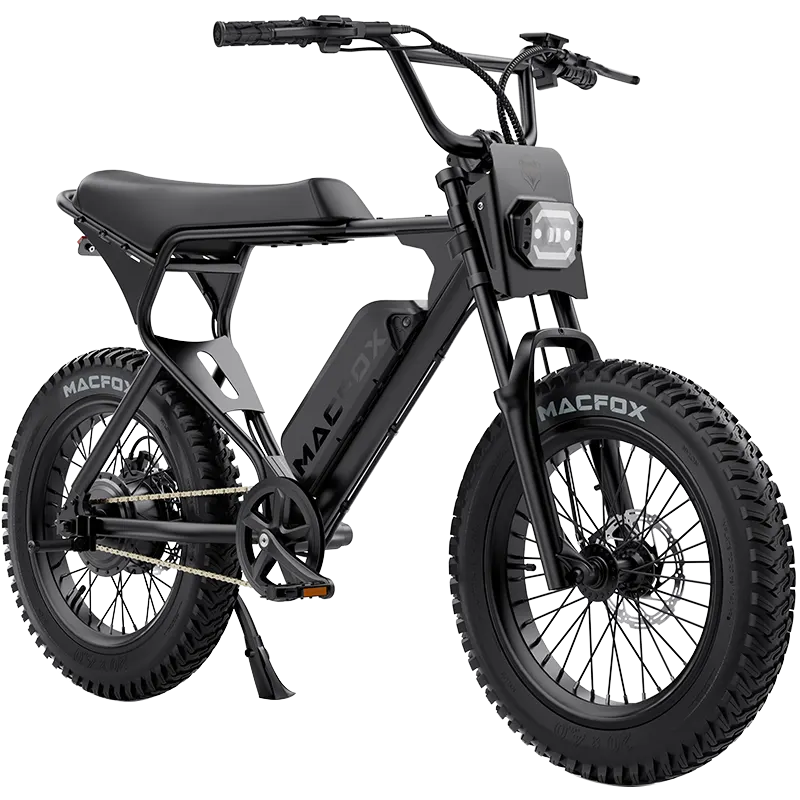
For rougher allowed routes, compare the Macfox X2 Pro e-bike after checking trail access and terrain. For longer paved or mixed-surface rides, compare the Macfox X7 e-bike if you want a more planted ride feel. Do not use product choice as a substitute for rule checks; the route still decides what is allowed.
Keep product planning late in the process. First choose the route type, then check the rules, then decide whether you need more tire volume, comfort, storage, lights, or range. That order prevents a bike from pushing you toward a trail that is not appropriate or not allowed.
FAQ
Are e-bikes allowed on all North Carolina bike trails?
No. Access depends on the land manager and posted trail rules. Some greenways and designated bike routes are practical for e-bikes, while some natural-surface or forest trails restrict them.
Can I ride an e-bike at DuPont State Recreational Forest?
Do not plan DuPont as an e-bike ride under current posted guidance. It is a strong example of why e-bike riders need to check official rules instead of relying on older trail lists.
What is the best first North Carolina e-bike route?
For most riders, a shorter paved greenway or low-stress city connector is the best first choice. It lets you test battery use, comfort, braking, and shared-path etiquette before trying longer or rougher routes.
Do I need a permit for Uwharrie or Badin Lake OHV?
Check the current official trail page before visiting. OHV-style systems can require passes, have seasonal closures, and use difficulty ratings that matter more than a normal greenway map.
Should I choose a fat tire e-bike for North Carolina trails?
It can help on rougher allowed surfaces, gravel, and mixed terrain, but tire width does not change access rules. Pick the route first, then choose the tire and bike setup that fit that route.
Bottom Line
The best North Carolina e-bike ride is the one where the route, rules, surface, and bike setup all match. Start with paved greenways or clearly allowed routes, treat Uwharrie-style OHV riding as a more prepared adventure, keep DuPont off the e-bike list unless official rules change, and verify current trail access before every trip.
More states are covered in our Best E-Bike Trails by State guide. Every Macfox model is a Class 2 e-bike (20 mph max) with UL 2849 certification. Take a look at the Macfox X1S for greenways, the Macfox X7 for longer days and the Macfox X2 Pro for mixed surfaces.
Last updated: October 2026.






1 thought on “North Carolina E-Bike Trails: Where to Ride and What to Check”
Aaron Kampe
It would be literally impossible to e-bike the MTS trail.