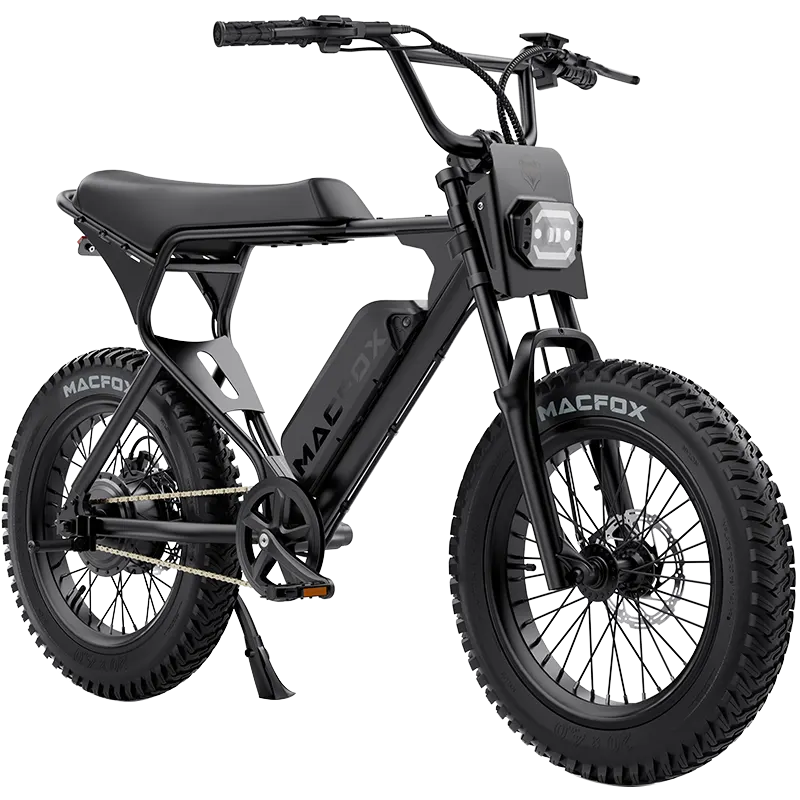

A fat-tire e-bike can be a good first e-bike for a rider when rough pavement, gravel, loose surfaces, or ride comfort matter more than low weight and tight-space handling. Wide tires can add grip and cushioning, but the complete bike can also be heavy, bulky, and harder to walk, park, lift, or steer slowly. The right first bike is the one you can fit, control, store, charge, and service on your normal route.

Quick Decision: Is a Fat-Tire E-Bike a Good First Bike for You?
| Your situation | What a fat-tire e-bike may add | What to check first |
|---|---|---|
| Broken pavement, gravel, sand, or loose paths | A larger tire contact patch and more tire volume | Route access, tread, pressure guidance, and braking |
| Mostly smooth streets and bike lanes | Comfort over cracks and curb transitions | Whether a lighter standard-tire commuter would be easier to handle |
| Ground-level garage or secure outdoor storage | Fewer lifting and stair problems | Door width, rack compatibility, and turning space |
| Apartment stairs or a tight indoor storage area | Little benefit once the motor is off | Complete-bike weight and whether you can move it safely |
| New to throttles or strong pedal assist | Traction at the tire | Smooth power delivery, brake reach, and low-assist practice |
| Limited mobility or confidence at stops | A planted feel on uneven ground | Stand-over clearance, seat height, and stable foot placement |
If you cannot comfortably walk the bike, turn it in a small space, squeeze both brake levers, and put a foot down at a stop, wider tires will not solve the fit problem. Start with control and storage, then compare motor power and range.
What Fat Tires Change for a Beginner Rider
Fat tires can soften small impacts and keep more rubber in contact with loose or uneven ground. That can help when the route includes gravel, worn pavement, grass, hard-packed dirt, or sandy patches. The benefit is most noticeable when tire choice and pressure match the surface.
The tradeoff is that a fat-tire e-bike usually occupies more space and can feel slower to change direction at walking speed. The tire does not make the complete bike light, and it does not replace good brakes, correct fit, or careful practice. A new rider should judge the complete platform, not tire width alone.
For a deeper platform comparison, see fat-tire e-bikes vs. regular e-bikes. Use the bicycle or tire maker's pressure guidance and the tire sidewall as the starting point; a single pressure recommendation is not right for every rider, load, tire, and surface. The electric bike tire pressure guide explains how those variables work together.
Types of Fat Tire Electric Bikes for Beginners
Fat-tire e-bike types often overlap. A step-through can also be a commuter, a folding bike can also carry cargo, and a full-suspension platform can still be used on pavement. Treat the type name as a starting point, then verify the complete bike's fit, size, controls, storage needs, and route use.
| Fat-tire e-bike type | Where it can fit | Beginner check |
|---|---|---|
| Commuter-oriented | Daily streets, broken pavement, and mixed urban surfaces | Complete-bike weight, turning space, rack compatibility, and charging |
| Trail-oriented or full suspension | Rougher mixed routes where suspension and tire volume have a clear job | Local access, low-speed control, brake feel, and suspension service |
| Step-through | Frequent stops or riders who want a lower frame entry | Actual stand-over clearance, seat height, foot placement, and frame stiffness |
| Folding | Storage spaces that benefit from a shorter folded shape | Folded dimensions, hinge operation, lifting weight, and whether it fits the intended vehicle or room |
| Cargo or utility | Racks, groceries, work gear, or a longer everyday load | Rated load, loaded braking, parking stability, length, and turning room |
Choose a type because it solves the route, fit, cargo, or storage problem you actually have. A rider using only smooth pavement and carrying the bike upstairs should still compare a lighter commuter before deciding. A rider mixing pavement with rough shoulders, gravel, or loose ground may have a clearer reason for the extra tire volume.
Fit and Low-Speed Control Come Before Motor Power
Motor power is easy to compare on a spec sheet, but first-ride confidence is built at walking speed. Check whether you can:
- stand over the frame without being forced onto your toes;
- reach the handlebar without locking your elbows;
- operate both brake levers with a secure grip;
- turn the handlebar without the tire, cable, or controls interfering;
- put one foot down quickly and consistently;
- walk the bike forward, backward, and through a doorway with the motor off.
A test ride should include several starts, stops, tight turns, and dismounts before higher assist levels are used. If the platform feels difficult without power, it may become harder to manage when a battery is depleted or the route includes a narrow gate, crowded rack, or steep ramp.
Beginner Specs That Matter in Everyday Use
Brakes and control reach
A heavier bike carries more momentum. Brake type matters, but lever reach, rotor condition, tire grip, rider load, and practice also affect stopping. Compare hydraulic and mechanical disc brakes, then check whether the controls fit your hands.
Assist response and throttle behavior
Ask how quickly assistance arrives after you begin pedaling and how the throttle behaves from a stop. A smooth, predictable response is more useful to a beginner than a high peak number. Begin in the lowest assist setting in an open area.
Battery handling and realistic route planning
Published range is not a promise for every ride. Speed, hills, rider and cargo load, temperature, tire pressure, stops, and assist level all change energy use. Check whether the battery can be removed for charging, where it may be charged, and how much reserve remains after the normal round trip.
Complete-bike size and service access
Confirm the assembled weight, overall width, tire size, replacement tube availability, and whether a nearby shop will service the motor system and brakes. A bike that fits the route but not the storage door is not a practical first bike.
Macfox X7 vs. X2 Pro for a First Fat-Tire E-Bike
Both are current fat-tire platforms, but they solve different route and handling problems. Neither should be chosen from motor power alone.
| Fit and use question | Macfox X7 | Macfox X2 Pro |
|---|---|---|
| Primary route | Daily commuting and mixed urban surfaces | Rougher mixed routes and trail-oriented use |
| Tire setup | 20 × 4.5-inch front and 20 × 5-inch rear tires | Fat-tire platform with front and rear suspension |
| Motor | 500W rated, 750W peak | 750W rated, 1000W peak |
| Published speed | 20 mph | 20 mph |
| Published range | Up to 35 miles with one battery or 70 miles with two | 40–80 miles across the published single- and dual-battery configurations |
| Beginner decision | Start here when daily streets, a lower rider-fit threshold, and ground-level storage lead the decision | Consider it when rougher terrain and full suspension matter and you can comfortably control the larger power platform |
Review the current Macfox X7 and Macfox X2 Pro specifications before ordering. Availability and published specifications can change. Compare the complete bike with your height, storage route, local rules, and service plan.
A First-Ride Practice Plan
- Walk the bike with the motor off. Practice backing up, turning around, using the kickstand, and moving through a doorway.
- Check the controls. Identify both brakes, assist controls, throttle, display, and power switch before moving.
- Use an open, flat area. Begin in the lowest assist level and keep both hands ready on the brakes.
- Repeat starts and stops. Build consistent foot placement before increasing speed.
- Practice wide and tight turns. Look through the turn, keep speed low, and avoid sudden throttle input.
- Add the real load. Test a lock or normal cargo after basic control is reliable, not on the first lap.
- Ride the real route in daylight. Check crossings, loose surfaces, narrow sections, parking access, and charging plans before relying on the bike.
Tire Pressure and Maintenance for New Riders
Check pressure with a gauge before the first ride and then at a consistent interval. Start within the tire and bicycle maker's guidance. A lower setting may add compliance on loose ground, while too little pressure can increase rim-strike, handling, and tire-damage risk. Too much pressure can reduce comfort and grip on rough surfaces.
Inspect the tread and sidewalls for cuts, embedded debris, or unusual wear. Confirm the axle, brakes, and wheel are secure after transport or service. If the steering pulls, the wheel rubs, or braking changes, stop and diagnose the problem before continuing.
Rules and Route Access Still Apply
Wide tires do not determine where an e-bike may be ridden. Access can depend on the bicycle's equipment, assisted speed, throttle use, trail policy, and state or local rules. Check the current e-bike class guide and confirm the rules for the roads, paths, parks, and trails on your route.
Final Checklist for Choosing a Fat-Tire E-Bike Type
- The bike fits your height and lets you stop with stable foot placement.
- You can walk, turn, park, and store it without relying on motor power.
- The tire format matches the real route rather than an imagined off-road use.
- Brake levers and controls are comfortable and predictable.
- The battery can be charged and stored where you live.
- The exact tire and tube size can be sourced and serviced.
- The bike's assisted speed and equipment match local route rules.
- You have practiced starts, stops, and tight turns before joining traffic.
Riders who need grip and comfort on mixed or broken surfaces may find a fat-tire e-bike reassuring after proper fit and practice. Riders who must carry a bike upstairs, store it in a tight room, or ride only smooth pavement should compare a lighter commuter before deciding. Browse current fat-tire electric bikes only after the route, fit, control, and storage checks are clear.
Frequently Asked Questions
Are fat-tire electric bikes good for beginners?
They can be when the rider needs comfort and grip on rough or loose surfaces and can safely manage the bike's size and weight. They are not automatically easier for stairs, tight storage, or low-speed turns.
Are fat-tire e-bikes easier to balance?
The wider contact patch can feel planted on uneven ground, but balance still depends on fit, speed, steering input, rider position, and practice. A bike that is too tall or heavy may reduce confidence at stops.
Can a fat-tire e-bike commute on pavement?
Yes. The more useful question is whether the extra width and weight add enough comfort or route capability to justify the storage and handling tradeoffs.
What tire pressure should a beginner use?
Begin with the bicycle maker's guidance and the range printed on the tire sidewall, then account for rider load, cargo, surface, and handling. Do not copy a universal pressure number from another tire.
Should a beginner choose the Macfox X7 or X2 Pro?
The X7 is the more direct starting point for daily streets and mixed urban surfaces. The X2 Pro makes more sense when rougher routes and full suspension are genuine needs and the rider can comfortably manage its stronger motor platform. Fit and a low-speed test remain the deciding checks.